
Reflections from my first New York Climate Week

New York Climate Week brings together an extraordinary mix of business leaders, investors, policymakers, NGOs and sustainability practitioners. Having worked in sustainability throughout my career, I’ve always viewed it as one of the most influential moments in the sustainability calendar, so, unsurprisingly I was incredibly excited to have the opportunity to take part this year.
I attended this year’s event to connect with peers, understand emerging trends and explore how businesses are responding to some of the biggest challenges facing the world today. One thing quickly became clear – the sustainability agenda is evolving.
I went in expecting a lot of talk about commitments, targets and reporting. There was some, but what became apparent was that most organizations are well into their sustainability journeys and the discussion is now focused on how sustainability is integrated into business planning, investment decisions and day-to-day operations.
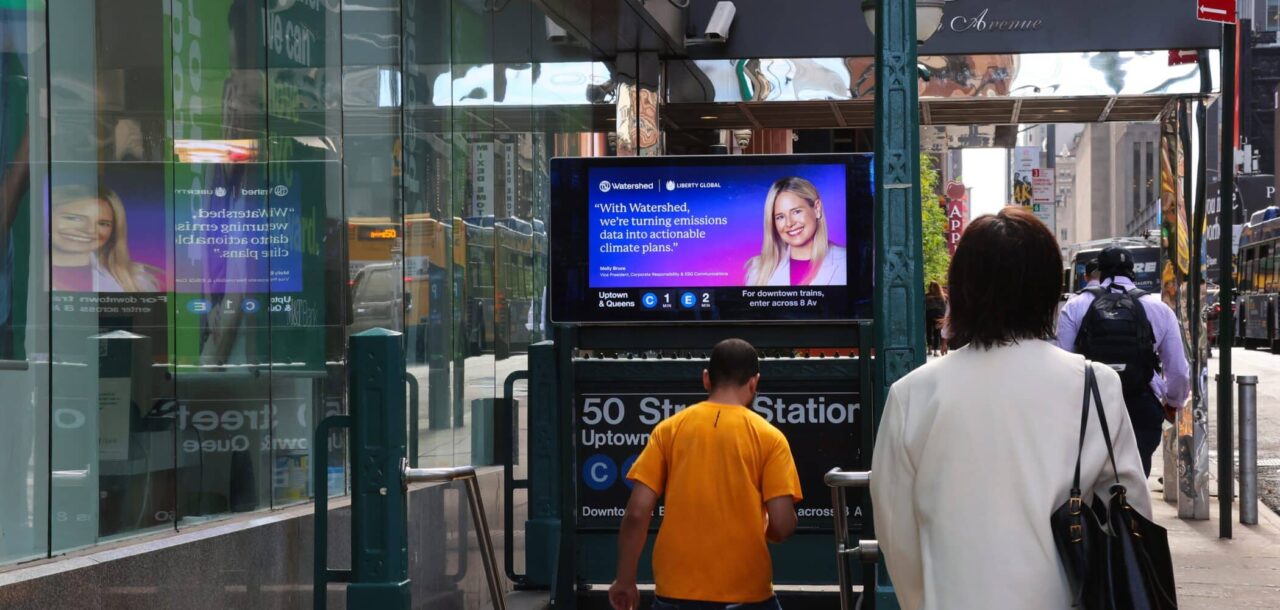
This came through consistently across the different events, from the World Economic Forum’s Sustainable Development Impact Meetings and the Watershed summit to the UN Global Compact sessions on how companies are translating ambition into action. Whether the topic was energy transition, infrastructure investment or innovation, the same question surfaced repeatedly: how can sustainability support growth and strengthen resilience?
That question was at the heart of Liberty Global’s Climate Week event with Formula E, Partners in Progress: Purpose, Performance and the Road Ahead. We brought together leaders from business, technology and sport, to explore how partnerships, innovation and investment can deliver commercial performance alongside positive impact. Our VP of Sustainability, Molly Bruce, addressed this in her remarks, highlighting how purpose and performance can reinforce one another, while emphasizing the importance of partnerships and collective action in advancing both sustainability and innovation.
Like every conference agenda in 2026, AI featured heavily at New York Climate Week. What surprised me was how quickly AI conversations turned into conversations about energy consumption. NVDIA’s Head of Sustainability boldly addressed the growing energy challenge associated with data centers, and how they are innovating to manage responsibly. At the S&P Global Climate Infrastructure Forum, speakers repeatedly returned to the impact AI is having on energy demand. It reinforced for me that energy transition is no longer just an environmental issue. It is increasingly a business issue affecting how companies think about investing and staying competitive.
Inevitably, my favorite moments of the week came from the people passionate about ensuring progress benefits everyone. While technological and environmental progress is accelerating, it’s benefits are not being shared equally. At Goodwall’s 100 Million Futures dinner, featuring leaders from organizations including Microsoft, EY and HP, the conversation focused on preparing the next generation, and particularly those from underserved backgrounds, for a future where both human and technology skills are increasingly important, and how to make those opportunities accessible to all. Our meetings with long-time partner Street Child and Goodwall highlighted the need to share the benefits of technological and environmental progress more broadly. As climate change and technological transformation reshape economies, access to education, skills and opportunity will remain critical.
Climate Week demonstrated the value of bringing people together. I connected with sustainability practitioners and business leaders from organizations including Watershed, MSCI, UN Global Compact, S&P Global, The Economist, Goodwall, Street Child and GeSI, among others. Speaking with such an array of organizations with diversity of thoughts and perspectives provided an opportunity not only to learn from others and benchmark our approach against peers, but also to share our own experiences and identify new opportunities for collaboration.
I left New York energized by the people I met and the conversations I had. More than anything, I came away with a renewed sense that sustainability is no longer a separate discussion but increasingly woven into an organization’s growth agenda.